
5 signs you're losing muscle, not fat (and what to do)
Workouts by Tiff and Dan · Updated October 20, 2026

When you lose weight, some of it is almost always lean tissue, not fat. In people carrying extra weight, fat-free mass (muscle, water and other lean tissue) usually makes up about 20 to 30% of the weight lost, according to a 2017 review in Advances in Nutrition. You can keep that share small: lose weight slowly, eat enough protein, lift weights at least twice a week and sleep enough. The scale can't tell you what you're losing, so track a few other things too.
- Not sure what's happening? Start with how to tell.
- Want the fixes? Go to how to keep muscle while losing fat.
- Want a plan? See a week of training that protects muscle.
Losing fat or losing muscle: at a glance
Losing fat
- Weekly average weight down about 0.5 to 1% a week
- Waist slowly going down
- Weights and reps holding steady or going up
- Energy steady
- Photos look leaner, even when the scale stalls
May be losing muscle
- Still losing more than 1% a week after the first two weeks
- Scale going down, waist the same for 3 or 4 weeks
- Weights and reps falling for 2 weeks or more
- Tired all the time
- Not lifting, or eating little protein
Two or three signs from the second list, for a few weeks, are worth acting on. Here's how to check, and what to change.
How to tell if you're losing muscle or fat
No single number tells you. Track these for three or four weeks and look at the trend.
| Measure | How | Good sign |
|---|---|---|
| Weekly average weight | Weigh yourself most mornings, after the bathroom and before eating. Compare this week's average with last week's. | Down about 0.5 to 1% of your body weight a week |
| Waist | Tape measure around your belly button, relaxed, once a week at the same time of day | Slowly going down |
| Strength | Write down the weights and reps in every workout | Holding steady or going up |
| Photos | Same spot, same light, same clothes, every 2 to 4 weeks | You look leaner, even in weeks the scale stalls |
Your weight moves up and down from day to day with water, salt and food, so the weekly average tells you more than any one morning.
About body fat scales: home scales estimate body fat by sending a small current through you, and the reading changes with how much water you've had, exercise and meals. If you use one, step on under the same conditions each time and watch the trend over weeks. If you want a real measure of muscle, a DEXA scan is much more accurate.
5 signs you may be losing muscle
None of these proves it on its own. Two or three together, for a few weeks, are worth acting on. And if you're losing weight without trying, that isn't a diet question: see a doctor.
1. Your lifts keep dropping
A small dip in strength is common when you eat less. Weights and reps that keep falling for two weeks or more, while you train the same way, can mean you're losing muscle, or that you're not recovering (too little food or sleep, or too much stress).
What to do: eat a little more (try 100 to 200 calories a day, mostly from protein and carbs) and check your protein and sleep against the targets below.
2. You're losing more than about 1% of your body weight a week
Faster loss means a bigger calorie deficit, and the share of weight lost as lean tissue tends to rise as the deficit gets bigger. A 2014 review on dieting while lifting recommends losing about 0.5 to 1% of your body weight a week to keep as much muscle as possible. For a 160 lb person, that's 0.8 to 1.6 lb a week.
The first week or two of a diet is the exception: a quick early drop is mostly water and stored carbohydrate.
What to do: if you're past the first two weeks and still losing more than 1% a week, eat a little more.
3. You're tired all the time
Eating too little, sleeping too little and training too hard can all leave you drained, and they're the same things that make muscle loss more likely. But tiredness has many causes, including anemia, thyroid problems, sleep apnea and depression (Cleveland Clinic).
What to do: eat a little more and protect your sleep. If the tiredness doesn't lift within a few days, or it makes daily life hard, see a doctor. Get care right away if it comes with chest pain, shortness of breath, or a racing or irregular heartbeat.
4. The scale drops but your waist doesn't
If your weight is falling but your waist and photos haven't changed in three or four weeks, more of the loss may be water and lean tissue than fat.
What to do: keep measuring for another couple of weeks before you change anything, and make sure you're lifting and eating enough protein.
5. You're not lifting, or you're eating little protein
This one is a cause more than a sign. Losing weight by eating less, with no strength training and little protein, makes it more likely that a bigger share of what you lose is muscle. In studies, strength training during weight loss reduced the loss of muscle, and higher protein diets helped a little more (Cava 2017).
What to do: see how to keep muscle while losing fat.
Why it happens
Your body runs on a mix of fuels all the time: mostly fat and carbohydrate, with a little protein. When you eat less than you burn, it covers most of the gap from fat stores, and some by breaking down protein, including muscle protein. There's no point where it stops burning fat and switches to muscle. What changes is the share.
More of the loss comes from muscle when:
- The deficit is big. The share of weight lost as lean tissue tends to rise with the size of the deficit (Helms 2014).
- Protein is low. Your body needs protein to repair and keep muscle.
- You don't lift. Strength training doesn't cause muscle loss. It's one of the best ways to protect muscle while you diet.
- You sleep too little. In a small study, 10 adults dieted for two weeks with either 8.5 or 5.5 hours in bed. With less sleep, they lost less fat (0.6 kg against 1.4 kg) and more fat-free mass (2.4 kg against 1.5 kg) (Nedeltcheva 2010).
How to keep muscle while losing fat
- Lift at least 2 days a week, working all your major muscle groups (CDC). Try to keep the weights and reps you could do before the diet. More days are fine if you recover well.
- Eat about 1.6 g of protein per kg of body weight a day, about 0.7 g per lb. In a 2018 analysis of 49 studies, the extra muscle people gained from lifting leveled off around that amount. Those studies were in people who weren't dieting; during weight loss, higher protein diets help a little more (Cava 2017).
- Keep the deficit moderate: aim to lose about 0.5 to 1% of your body weight a week.
- Sleep 7 hours or more a night (CDC).
- Don't stress about protein timing. A 2013 analysis found total daily protein mattered far more than eating it right after a workout. Spreading it over three or four meals is just an easy way to reach the total.
| Body weight | Protein a day (about 1.6 g per kg) |
|---|---|
| 120 lb (54 kg) | About 85 g |
| 150 lb (68 kg) | About 110 g |
| 180 lb (82 kg) | About 130 g |
| 210 lb (95 kg) | About 150 g |
If you have a lot of weight to lose, use your goal weight. If you have kidney disease, ask your doctor before you eat more protein. For meal ideas, see our high protein meals under 500 calories.
What a 110 g protein day can look like
Three of our recipes cover most of it for a 150 lb person:
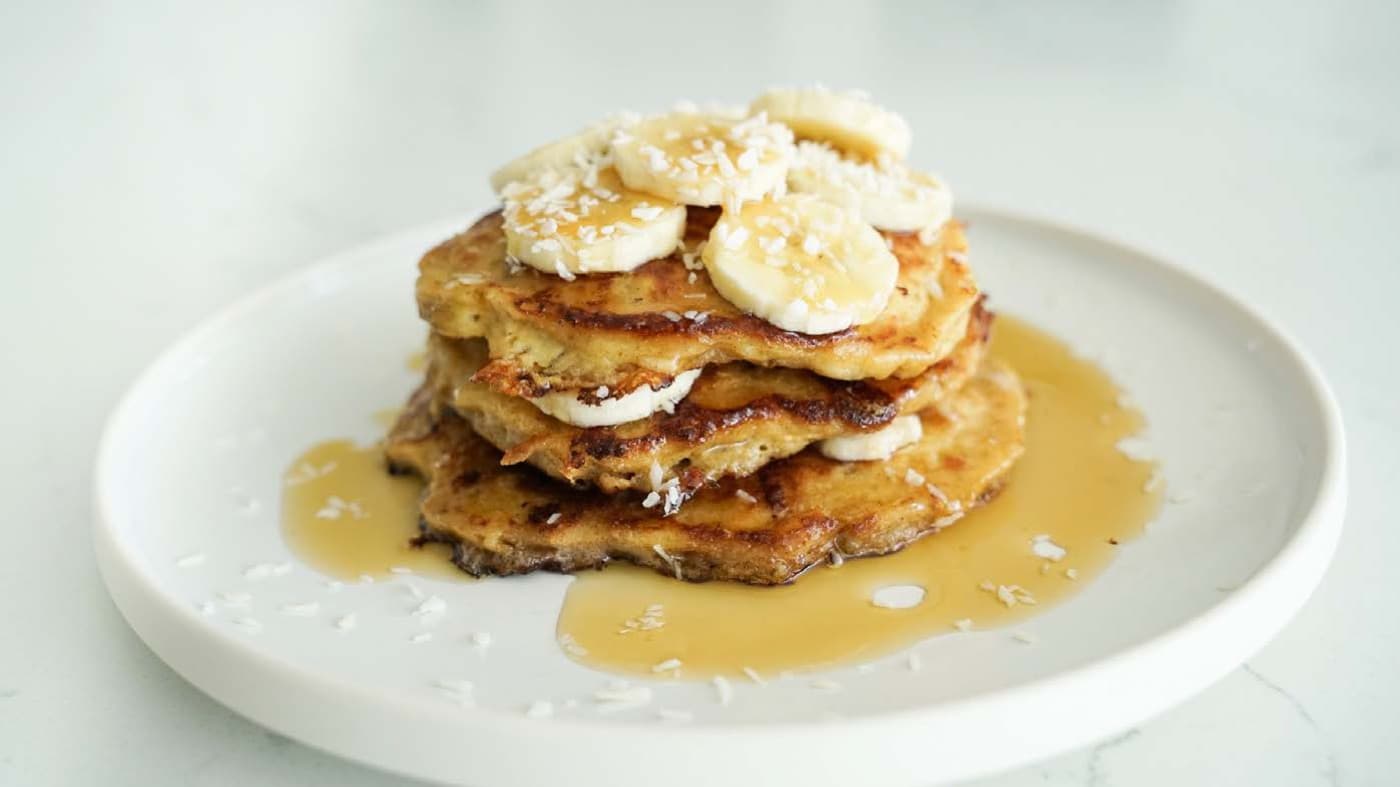
Breakfast
Cottage Cheese Banana Protein Pancakes
31 g protein · 495 calories
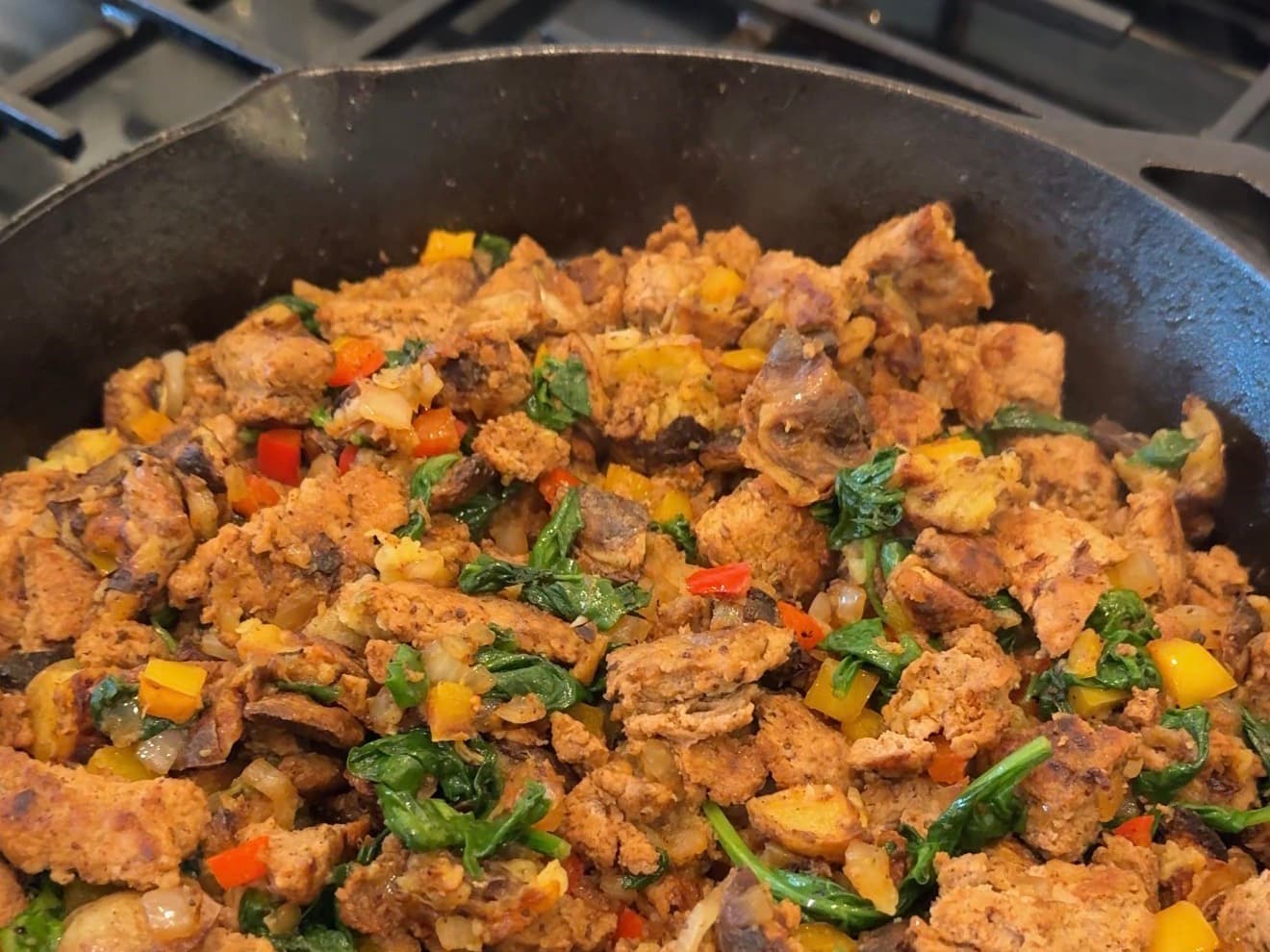
Lunch
Crispy Turkey Breakfast Hash
32 g protein · 395 calories
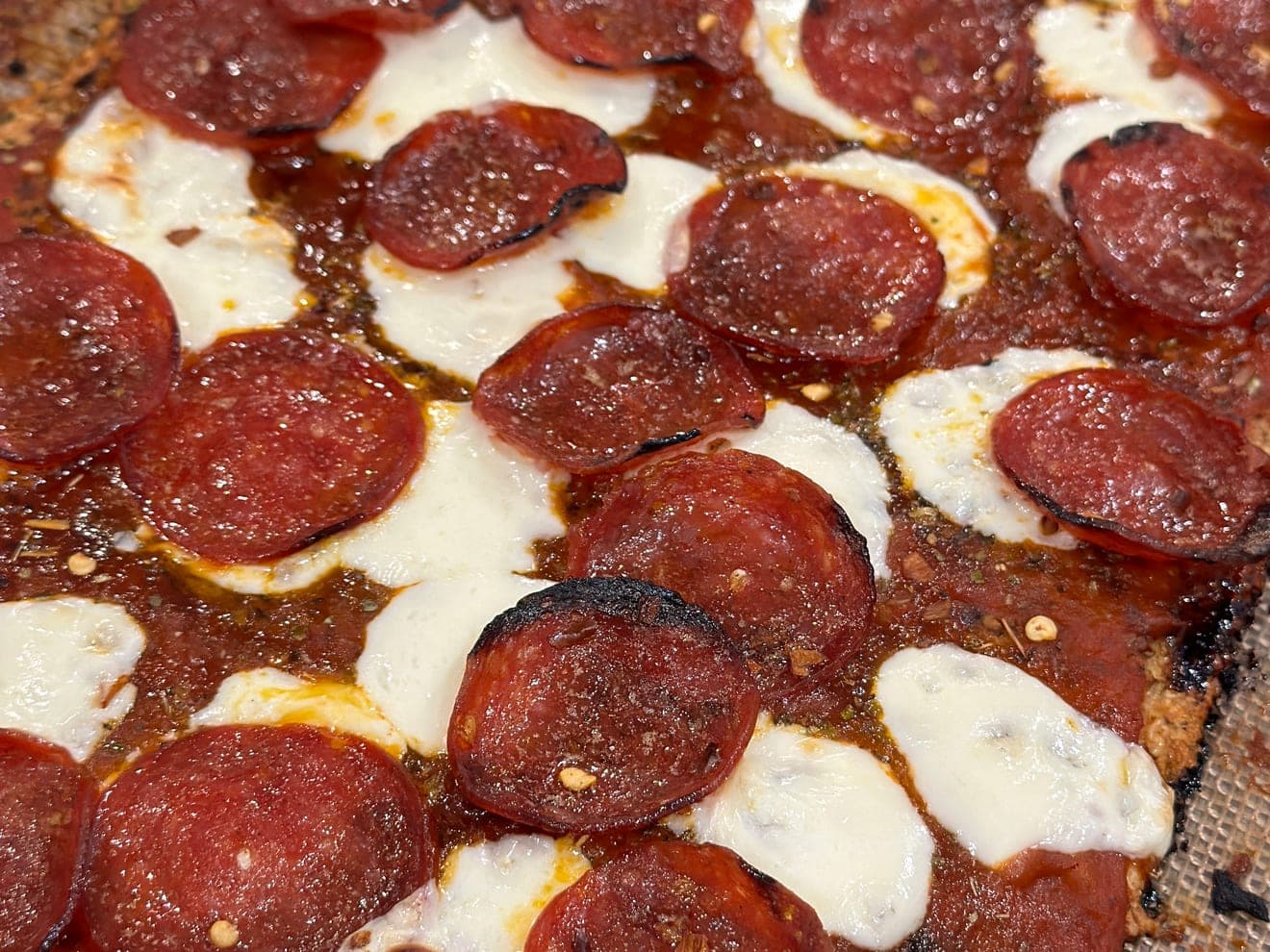
Dinner
Hot Honey Chicken Crust Pizza
41 g protein · 415 calories
Add a glass of milk as a snack (1 cup, about 8 g of protein) and the day comes to about 112 g. The protein for each recipe is per serving, worked out from USDA data.
A week of training that protects muscle
Three strength days, two HIIT days and two rest days. This is week 1 of our 6 Week Shred I, a dumbbell program for intermediate to advanced levels.
| Day | Workout |
|---|---|
| Monday | Complete lower body workout with dumbbells (40 min) |
| Tuesday | Complete upper body dumbbell workout (41 min) |
| Wednesday | Total body HIIT cardio + abs (31 min, no equipment) |
| Thursday | Rest |
| Friday | Extreme abs and core workout (26 min, no equipment) |
| Saturday | Full body dumbbell HIIT: unilateral (33 min) |
| Sunday | Rest |
Start with Monday's workout. Press play and follow along:
The other five weeks are on the 6 Week Shred I page. Newer to lifting? The 6 Week Full Body Series is three days a week, for beginner to intermediate levels. Or pick single workouts from our full body dumbbell workouts.
Questions
Is it possible to lose fat but not muscle?
Mostly. Losing some lean tissue is normal, but losing weight slowly, eating enough protein and lifting keep it small. People who are new to lifting can sometimes gain muscle while they lose fat.
When does your body burn muscle instead of fat?
It never fully switches. Your body always burns a mix, and in a calorie deficit most of the loss comes from fat. The share that comes from muscle goes up when the deficit is large, protein is low, you don't lift, or you're short on sleep.
Does cardio burn muscle?
Not by itself. Muscle loss comes from a big deficit, too little protein and not lifting. Lots of cardio, especially running, can blunt muscle and strength gains a little when you also lift (Wilson 2012), so make lifting the base of your week and add cardio around it.
How much protein do I need to keep muscle?
About 1.6 g per kg of body weight a day (about 0.7 g per lb) is a good target if you lift. For a 150 lb person, that's about 110 g a day.
Is losing 2 lb a week too fast?
It depends on your size. The CDC says people who lose about 1 to 2 lb a week are more likely to keep it off, and for keeping muscle, about 0.5 to 1% of your body weight a week is a good pace. So 2 lb a week is fine at 200 lb or more, but fast for someone who weighs 140 lb.
Do I need protein right after a workout?
No. Your total protein for the day matters far more than the timing. A meal with protein in the hours around your workout is plenty.


