Can You Build An Upper Body With Bodyweight Workouts Alone?

You’ve been doing push ups and tricep dips for weeks, but now your arms aren’t burning like before, and the routine feels boring. You start questioning whether bodyweight exercises can really build muscle, or if you need a gym to see real results.
The truth is, you absolutely can build upper body strength and muscle using only bodyweight training. But it comes with one critical principle that most beginners often miss: progressive overload!
Progressive overload means you’re constantly asking your muscles to do a little bit more than last time. That could mean more reps, harder variations, or shorter rest breaks.
However, this is not your only option.
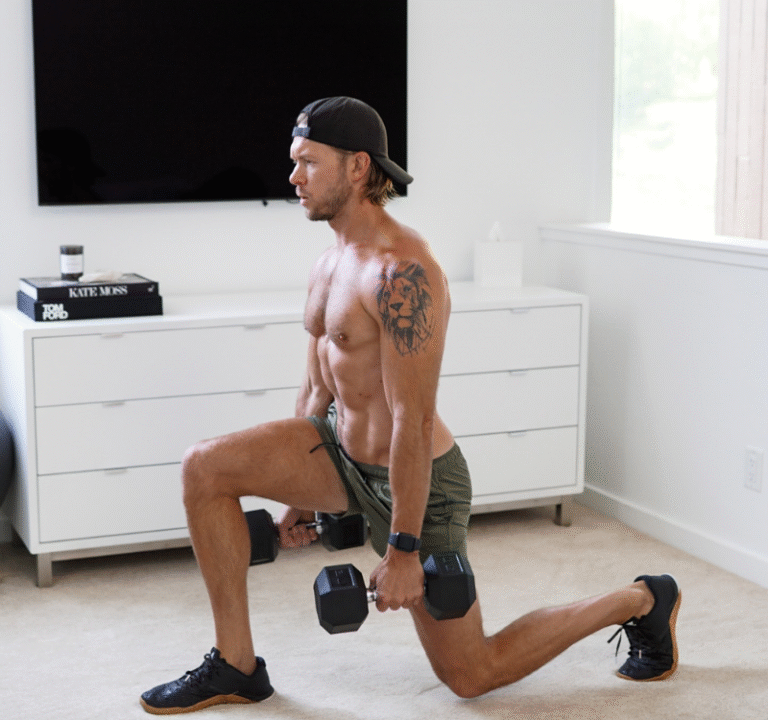
Adding a set of dumbbells to your routine can further ramp up the challenge. And by weights, we DO NOT mean heavy gym gear. Just a set of dumbbells will do.
This guide will share a smart approach to building the upper body and show you exactly how to progress with bodyweight and dumbbell only workouts.
Stay tuned for more.
How To Get Started With At Home Upper Body Workouts?
All the beginners must live by one rule: ‘BASICS FIRST’
If you jump to the advanced variations before practicing the basics, you may risk injury. Here is how to get started:
Start With Building The Foundation:
When you’re just starting out, the first 2 weeks are all about nailing the fundamentals. Pick a body weight workout routine with basic movements, even if it feels easy. Your foundation should include:
- Primary pushing exercises like push ups
- Primary pulling exercises like plank rows and swimmers
- Basic secondary movements like shoulder taps or snow angels.
Follow the upper body routine 2 to 3 times a week with one day’s gap between two workouts. This will give your muscles the time they need to rest and recover.
This no equipment upper body workout is perfect for beginners. The movements are simple, require no equipment, and you can take as many breaks as you need.
If the workout feels too easy, just shorten your rest periods.
Remember to start with a warm up.
Master The Form:
The habits you build in your early training days become the foundation for your long term progress, which is why learning proper form from the start is so important.
In case you are wondering, bad form means:
- You’ll recruit the wrong muscles.
- You’ll build bad motor patterns that limit future progress
- You increase the risk of back and neck injuries.
Learn To Control Your Tempo:
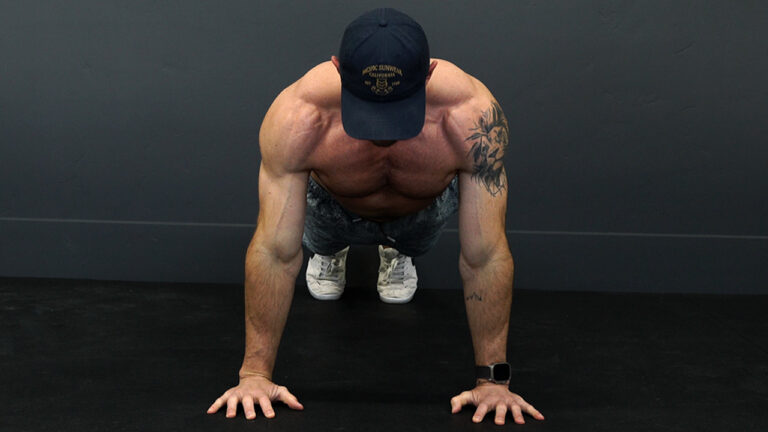
Most beginners think doing push ups means moving as fast as possible. However, this is the wrong approach! Time Under Tension (TUT), ‘the total time your muscles stay working during a set,’ is one of the strongest drivers of muscle growth.
Slowing down each rep increases muscle fiber recruitment and helps you build more strength and stability.
Research shows that 20-70 seconds of time under tension (TUT) per set optimizes muscle growth, with particularly strong results in the 40 to 60 second range
For example, if you are doing pushups follow the following tempo:
Go 3 seconds down +Take 1 second pause +Stay 1 second up = 5 seconds per pushup.
This way, you will achieve more time under tension per exercise.
Tip: If you can’t do a standard push up in a slow tempo, use lighter variations (like knee push ups) to maintain proper form and minimize the stress on joints.

Reduce Rest Time:
Once an exercise feels comfortable, the simplest way to progress is by reducing your rest time. This improves your endurance and challenges your muscles without changing the movement.
Here’s a progression example using this technique:
| Time | Activity | Rest |
| Week 1-2: | 60s | 60s |
| Week 3-4 | 60s | 60s |
| Week 5-6: | 60s | 10s |
Note: You haven’t changed the exercise or added reps. You’ve simply increased your work capacity. This way, your body adapts to become more efficient and builds more muscular endurance.
Limitations Of Body Weight Exercises And How To Overcome Them?
While bodyweight training can take you far, especially in your first year, there eventually comes a point where your body adapts. When that happens, progress naturally slows down, and you may need new challenges to keep improving.”
How Do You Know You’re Approaching The Ceiling?
- You can perform your current exercise for 15+ reps comfortably
- New variations feel only slightly harder.
- Progress has slowed, and there are no new strength gains for 3+ weeks.
- Your workouts feel like maintenance rather than progression.
When this happens, you have two choices:
1.Level up with advanced bodyweight progressions like archer push ups, one arm variations, and plyometric movements
2. Add external resistance like dumbbells, kettlebells, or resistance bands.
Note:Don’t add weights out of impatience. Start with light dumbbells (2 to 5 kg). Remember that consistency beats intensity every single time.
What Are The Best Upper Body Exercises For Beginners?
Your entire upper body training system should revolve around these five movement patterns. Each targets specific muscle groups, ensuring balanced development and injury prevention.
1. Push Movements
Exercises like pushups and chest presses work your chest, shoulders, and triceps. These build the horizontal pressing strength needed for daily tasks like pushing a door or pushing off during a run.
Also, read a step by step guide on how to do pushups and their variations!
2. Pull Movements
Movements like ‘rows’ (bent over rows, renegade rows) and ‘pullovers’ strengthen your back and biceps. They improve your ability to pull or lift objects and support good posture.
3. Shoulder Exercises
Shoulder movements like presses, lateral, and front raises focus on shoulder strength and mobility. These exercises help with lifting and overhead movements essential in everyday activities.
4. Arm Work
Bicep curls and tricep extensions or kickbacks target your arms. Building arm strength using these exercises supports everyday motions such as grabbing, lifting, and pushing.
5. Core Activation
Plank variations and abdominal exercises develop core stability. A strong core supports overall body movements and links upper and lower body strength.
Why Full Body Training is The Smarter Approach?
If you only train your upper body, you’re leaving a huge part of your progress on the table. Your legs, core, and upper body work as one system, and when you train them together, everything improves. Full body training:
- Burn more calories.
- Builds a balanced and athletic physique, and
- Triggers stronger hormonal responses that support muscle growth.
This way, your overall fitness develops in a way that isolated training simply can’t match.
The smarter model: Upper + Lower Training Split
| Monday | Tuesday | Wednesday | Thursday | Friday | Saturday | Sunday |
| Active Rest | Active Rest | Rest |
This is week 1 of the TIFFxDAN 4×5 method.
You train 4 times a week, following a smart upper/lower split that balances your body. The program runs for 5 weeks, and you only need two sets of dumbbells plus your bodyweight to do it.
Every session is a structured video workout. Just press play, follow along with TIFF and Dan, and get your sweat on.
No guesswork. No boring routines. Just real workouts designed to make you stronger, leaner, and more confident.
This method works because it hits every major muscle group with the right balance of challenge and recovery.
If you want a workout plan that fits real life and actually delivers, the TIFFxDAN 4×5 method is waiting. Just grab your dumbbells, hit play, and start building the body you want. Access the full 4×5 method playlist here!
Here is what others are saying about this training method on YouTube:

Conclusion
Building a stronger upper body isn’t complicated; it just takes the right approach and consistent effort.
Start today with the basic body weight workouts, and apply progressive overload in the form of increased intensity, exercise variations, until you need to add the dumbbells.
Want a detailed roadmap? Head over to our YouTube channel.
We’ve got structured upper body programs built specifically for beginners, complete with form coaching, progression strategies, and a community of people going through the same journey.
Your transformation starts with showing up today!
FAQ:
Most people feel stronger in 3 to 4 weeks and see definition by week 6 to 8. Results vary based on body fat levels, diet, hydration, sleep, and the consistency of your training.
Push ups, rows, shoulder presses, curls, and planks cover all major movement patterns. These build balanced strength, better posture, and protect you from injuries.
Yes, but not alone. Upper body exercises burn calories and build muscle, which boosts metabolism. But when you pair them with full body workouts, especially legs and core, you burn significantly more fat.
Beginners get the best results with 2–3 sessions per week, with rest days in between. This gives enough stimulus to grow while allowing proper recovery.